
October 4, 2007
BY Kathy Chilek - VICTORIA COUNTY MASTER GARDENER
EDITED BY CHARLA BORCHERS LEON
Helping create the international section of Victoria Educational Gardens sounded a year ago like an unprecedented opportunity to go on an intriguing, all-out, let-yourself-go search for exciting and unusual specimens.
Who could resist? My husband and I volunteered to help.
The International Garden was originally conceived as a way to highlight the plants brought to Texas by the early settlers of Victoria County. A visit with the research and planning committee for the previously constructed Heirloom Garden of Victoria Educational Gardens, confirmed our suspicions that this need already had been met with an impressive array of old-fashioned flowering plants, trees, shrubs and vines.
Research also revealed that many of those traditional garden favorites did not originate in the "old country" from where grandparents brought them.
Czech families in the Victoria area, for example, will remember grandmothers who made delicious poppy seed cake or poppy seed kolaches. Though embraced by traditional Czech families as a culinary "must-have," that type of poppy was brought to western European countries from Asia and then migrated to Texas and other U.S. locations with those families.
Still wanting to make the garden relevant to the people of Victoria, we went online to look at the ethnic makeup of the city according to the most recent records.
At the time, 2005, the total population was 84,044. In addition to the specifically counted groups of Hispanic or Latino, Black, White, American Indian, Asian, Native Hawaiian and Other Pacific Islander, there were 14,091 residents of "some other race" in Victoria.
Browse the last name columns in the Victoria phone book, throw in the fact that our nephew knows a family from Egypt who attends his neighborhood church here and you will discover that Victoria has gone global.
Now we had a mission: Go out and find as many plants of non-U.S. native origin representing as many countries as possible. And all selections must be able to survive our weather and soil conditions.
It was a treasure hunt. We followed clues from DeWitt County Historical Society in Cuero to Barker History Center in Austin and from Indianola to Fredericksburg.
Along the way we discovered the legacy of Gilbert Onderdonk who devoted 36 years to developing horticulture in South Texas and built the nursery that Nursery was named for. We examined original orders for plants, handwritten in German from the 1800s. We dug through Texas garden magazines printed from the 1980s to today. We struck silver when we found shrubs in Corpus Christi that took the concrete heat of city medians and struck gold in two nurseries in Austin that actually listed countries of origin on their pot labels. After six months 84 black plastic potted treasures were stashed safely beneath our backyard oak trees.
The fun part was over. It was time to dig some holes.
We had our work cut out for us. The area designated for our part of the garden had been used as a roadway for delivery trucks before it was fenced and given to us.
We attacked the 30-foot by 10-foot bed to find the first 2 inches of soil to be fairly soft and loose. Then we hit the softball-size gravel thoroughly mixed and packed into heavy clay soil by large trailers delivering landscape boulders and several dump trucks bearing mulch, brick pavers and gravel.
Planting days started early and finished when the last sweaty body left for a very late lunch and a lot of air conditioning. Volunteers cheered each other on from the other dozen-plus challenging plots in the expansion area.
Just as the last precious plant was safely slipped into its hard-earned hole, the monsoonal rains of summer began. With all of Victoria we watched the rain pound away and wondered if the plants would survive. When the torrents slowed, we waded out to the garden to take a peek. As we stood on the flooded sidewalk looking down, the plants in the first third of the long narrow bed looked up at us though a full inch of water over their heads. Three weeks later a wavy, blackened line of mulch marked the newly dried beach where their crispy remains lay.
As I gathered up the sticks that once were stems, I thought of their replacements already being gathered. It suddenly occurred to me how very much alike the early settlers, the new residents of Victoria and these plants were. They had all come to Texas from all parts of the world seeking a new life. Some would stay for a while, find it not to their liking, then move on. Some would put down deep, strong roots. Some would be tough. Despite the hurricanes, the floods, the droughts and the heat, some would survive, thrive and, finally, call Texas home..
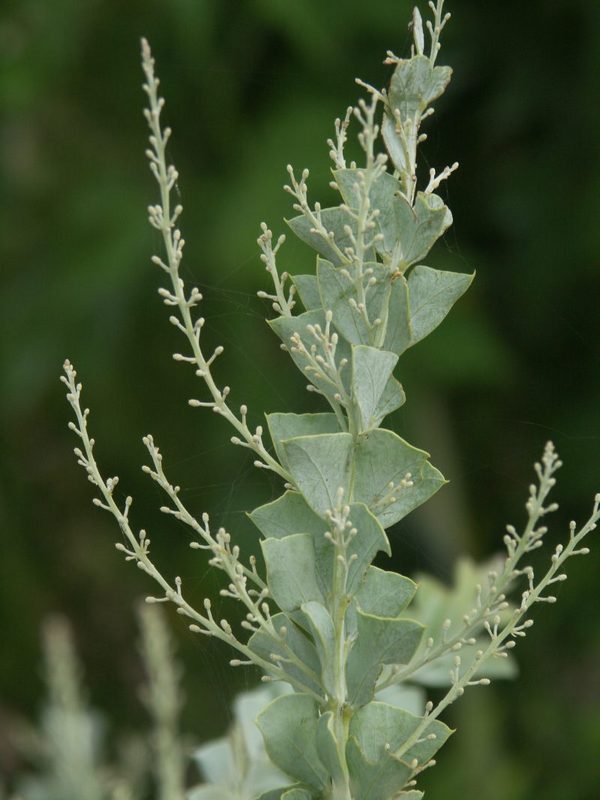
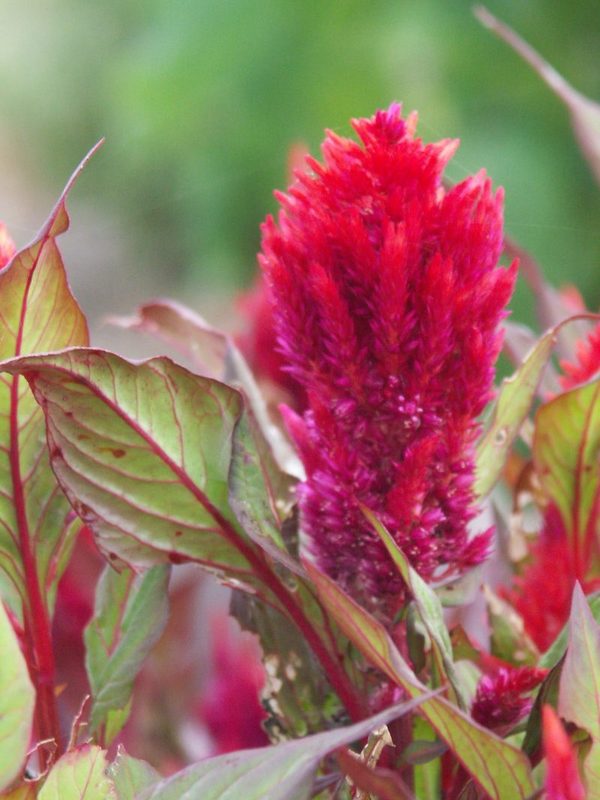
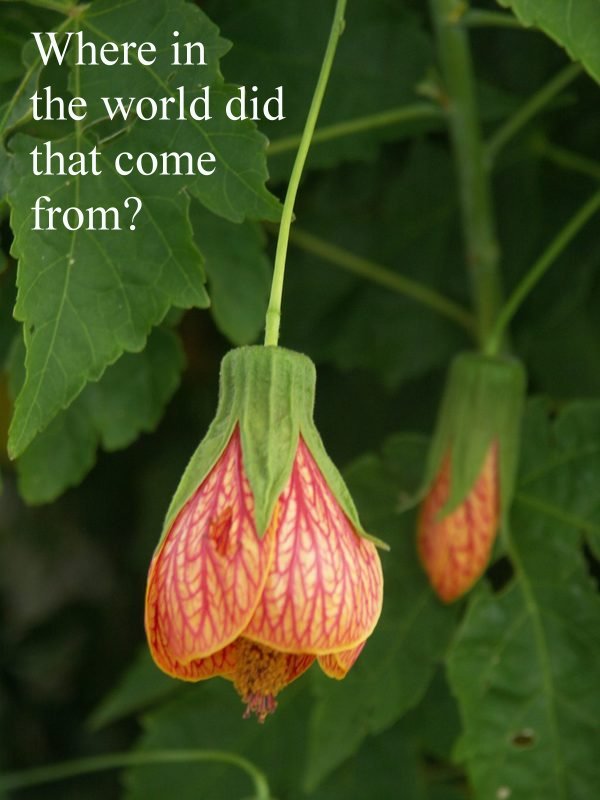
These (Chinese Lantern from China, top; Knife Leaf Acacia from Australia, left; and Cockscomb from Africa, right) plants
descend from different corners of the world, but all can be found in the International Gardens at Victoria Educational Gardens.
The following is a partical list of plants and their countries or continents of origin available for viewing in the International
Gardens at Victoria Educational Gardens. The main entrance of the garden is open to the public from dawn to dusk.
Sky Pencil Holly (Ilex crenata) - Japan
Spurge (Euphorbia rigida) - Mediterranean/Middle East
Sugar Cane (Saccharum officianarum) - World Tropics
Tea Tree (Leptospermum scoparium) - New Zealand
Verbena (Verbena bonariensis) - South America
Yew Pine (Podocarpus macrophyllus) - Japan/China
Fountain Grass - Asia/Australia
Lesser Calamint - Europe/North Africa
Orange Sedge - New Zealand
Silver Sage - Europe/N. Africa
Tropical Milkweed - South America
Flax Lily - Australia/New Zealand
Calabanus (Calabanus hookerii) - Mexico
Chinese Lantern (Abutilon x hybridum) - South America
Common Olive (Ofea europaea) - Africa/Arabia/Asia
Cranberry Cotoneaster (Cotoneaster apiculatus) - China
Epazote (Cenopodium ambrosiodes) - Mexico
Fairy Fan Flower (Scaevola aemulata) - Australia
Flowering Quince (Chaenomeles japonica) - Japan/China
Italian Cypress (Cupressus semperviriens) - Mediterranean
Jerusalem Sage (Phlomis russelliana) - Syria
Knife Leaf Acacia (Acacia cultriformis) - Australia
Natal Plum (Carissa macrocarpa) - Africa