
Pros and cons can help you decide on the right Christmas tree
November 20, 2008
BY MARTA Q. CHAPAPIEWSKI,
Victoria County Master Gardener
Edited by Charla Borchers Leon,
Victoria County Master Gardener
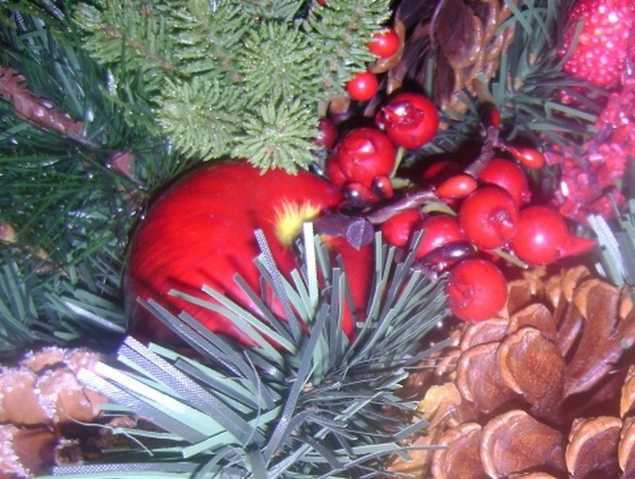
Natural decorations like the red apple, berries and pinecone make this artificial tree greenery look real without having to worry about browning and shedding of its needles.
Here are few things to think about when choosing your Christmas tree: real or artificial? It has got to be just the right size, can't be too tall or too small, too skinny or too fat. You might want to measure the height of your location. There are pros and cons about both real Christmas trees and artificial Christmas trees.
REAL CHRISTMAS TREES
PROS:
Buying a real Christmas tree is a tradition. Most sources agree that the first Christmas tree appeared in the United States in the 1800s. Christmas trees were cut down from natural sources and decorated. By the 1930s, almost every home in the United States decorated a real Christmas tree at Christmas time. It is something that the whole family can enjoy doing together. Also, you might enjoy the wonderful scent of a real Christmas tree in your home.
Since then you have come to the system that you know today. You can order your real Christmas tree online, or you can go to a Christmas tree farm and cut your own. Farm locations in our part of the state can be found at www.texaschristmastrees.com. There are local retailers who sell real Christmas trees and those who move into the area and sell trees from temporary lots. Any way you choose, you can easily purchase your fresh, real Christmas tree.
If you are worried about cutting down a real tree, don't be. Christmas trees are grown as crops much like any other crop. According to the National Christmas Tree Association, for every tree harvested, three seedlings are planted in its place. Real Christmas trees take in harmful greenhouse gases such as carbon dioxide, and, therefore, help against global warming. Christmas tree crops supply millions of people oxygen and give us many varieties of trees to choose from. Real Christmas trees are 100 percent recyclable and biodegradable. They can be made into compost, and the decomposition of real Christmas trees replenishes nutrients and elements to the soil.
If you are into the green issue, a real Christmas tree is the only way to go. Real Christmas trees also provide jobs and help the economy. According to the National Christmas Tree Association, there are about 21,000 Christmas tree growers in the U.S., and more than 100,000 people employed full or part-time in the industry. North American Real Christmas trees are grown in all 50 states and Canada.
The top-selling real Christmas trees are: Balsam fir, Douglas fir, Fraser fir, noble fir, Scotch pine, Virginia pine and white pine, according to the National Christmas Tree Association.
Here is a good tip if you are buying a fresh Christmas tree. Needles on fresh Christmas trees do not break. If they do, it means the tree was not cut recently or is very dry. In other words, pass it by and look for another tree or go to another Christmas tree lot, or, find out when a new shipment of Christmas trees is being delivered and try to go when they are fresh.
CONS:
Of course if you want a real Christmas tree, you will have to go out and pick one. Transporting the tree can be difficult. The coarse needles can prick you and it may be a little bit more difficult than an artificial tree to decorate. Real Christmas trees need maintenance to keep them fresh. A tree that is not maintained properly can be a fire hazard. Also, a real Christmas tree can only be set up for a limited amount of time for safety purposes. The needles on a real Christmas tree will shed and can be messy. Real Christmas trees are less economical and you will have to dispose of the tree after Christmas although most cities provide a real Christmas tree recycling program.
ARTIFICIAL CHRISTMAS TREES
PROS:
You might prefer the ease of selecting and maintaining an artificial tree. There are a wide variety of artificial trees to choose from, most imported from China. You can buy easy to assemble, pre-assembled, pre-lit, fiber optic and even pre-decorated artificial trees. There are also other kinds of artificial trees made out of metals, cloth, feathers, tinsel, leaves, almost anything you can think of. Artificial trees require little or no maintenance, most do not shed messy needles, have no potentially allergic pollen or plant parts, can be set up earlier and left up longer, are fire retardant (not fireproof), and possibly more economical if you use them for additional years.
CONS:
Artificial Christmas trees contain polyvinyl chloride. The manufacturing process for PVC is detrimental to the environment. It creates dioxin, the most toxic man-made chemical. Artificial trees are non-recyclable and non-biodegradable. They end up in landfills indefinitely and are a burden to our environment. They can look fake, take up storage space, are significantly more expensive initially, and are little help to the U.S. economy. Eighty-five percent of artificial trees worldwide are manufactured in China, according to the U. S. Department of Commerce.
FIRE HAZARDS
Be careful, overloaded electrical outlets, faulty wires and just plain not being careful are the most common causes of holiday fires, which affect both artificial and real Christmas trees.
The most important thing is that you are happy with your tree that you buy. Everyone has different reasons for making different choices. What ever your reasons for choosing your real or artificial Christmas tree may be, you are the only one who can decide what is best suitable for you. Happy Holidays.
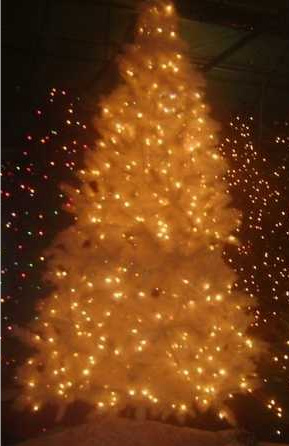
Top: The Fraser fir has become one of the more popular fresh trees due to its durable characteristics. It often is narrower than other types, has softer and less sticky needles and does not shed as readily.
“Lighted artificial trees in various sizes and colors of lights are already available for purchase for this holiday season. Make your selection based on whether you wish to assemble it or not, and if it is pre-lit and/or decorated or not. Don’t forget storage requirements when choosing your tree.”
PROS
Wonderful scent
Lot of selections
Traditional choice (whole family can help)
Take in harmful greenhouse gases
Release oxygen
Help economy
Provide jobs
Another tree is planted for each tree harvested
100% biodegradable
Recyclable
Decomposing trees add nutrients to the earth
CONS
Need maintenance
Fire risk if not maintained
Shed messy pine needles
Set up for a limited time
Less economical
Require transportation of tree
Require disposing of tree
Coarse needles prick you
ARTIFICIAL CHRISTMAS TREES
PROS
Easy selection
No maintenance
No messy pine needles
No pine allergies
Easy to assemble
Set up earlier and left up longer
Fire retardant
Last for years, more economical
Many types to choose from
CONS
Contain PVC (polyvinyl chloride)
Can look fake
85% come from China; no help to economy
Non-recyclable or biodegradable
Time consuming to assemble
Take up storage space; attract insects during storage
Manufacturing process detrimental to environmental
Significantly more expensive
Contain plastics and metals
Contain lead used to make PVC plastic
Burden to environment indefinitely
Look for next week's article on caring for your Christmas tree.