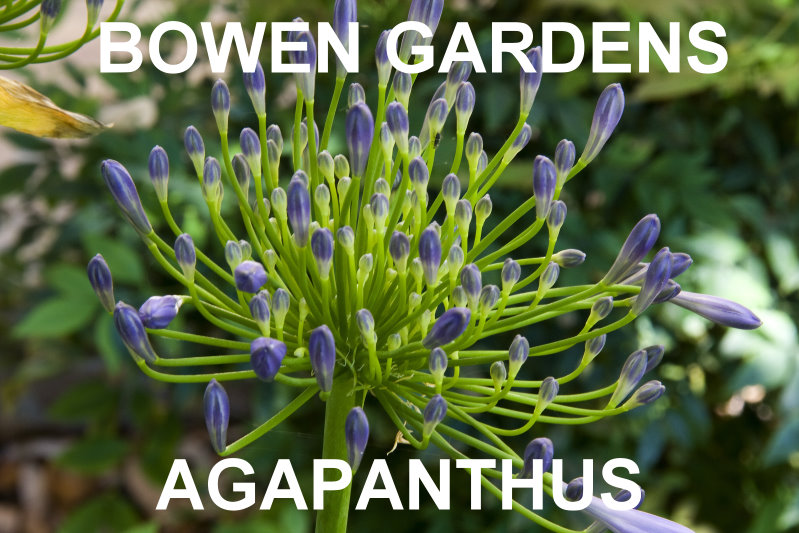
(Agapanthus africanus)
Agapanthus is a native of South Africa, commonly known as Lily of the Nile—a clumping, evergreen perennial with lovely, round umbels made up of many blue tubular flowers on a 2-3 ft. stem from mid to late summer (earlier in So. Texas.) They are grown for their strap-shaped leaves which form clumps in humus-type, well drained, moist soil. Like to be crowded. Hardy in Zone 7-9. Full sun to part sun. Medium to low water required; needs more water in summer. Propagation from division or seeds. Good for containers. The dwarf Lily of the Nile ‘Peter Pan’ has light blue flowers on a stem that grows to 1 to 1.5 tall.
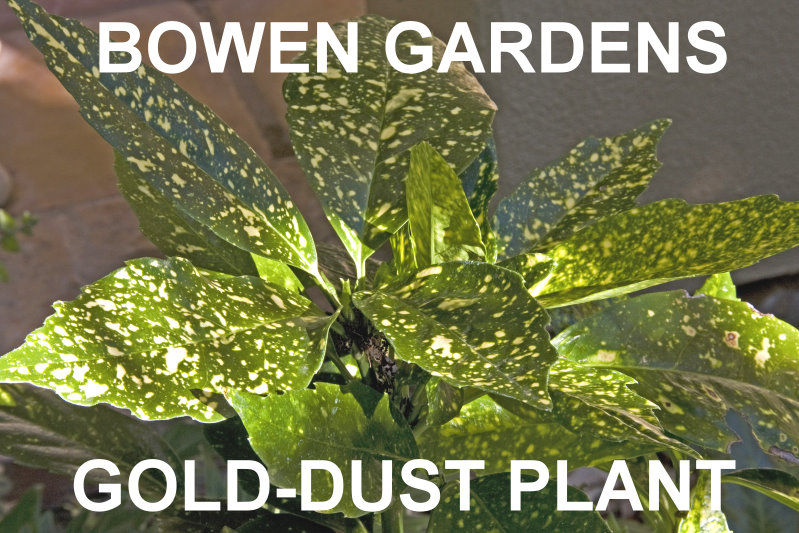
(Aucuba japonica variegate 'Gold Dust’)
Dense upright evergreen shrub, slow-growing up to 4-6’ tall and wide, that flowers March through April, but the flowers are insignificant. The male has yellow stamen and the female gets purple flowers, then red fruit. It’s a perfect colorful plant for that bare, shady area as ‘Gold Dust’ loves the shade and is great for under large trees or eaves of the house. It has shiny, dark green foliage, variegated with bright gold sprinkles. There are so many gold speckles that the plant appears yellow-green. Water regularly, but it will tolerate drought. Also does well in pots and even inside as a house plant. Hardy Zones 6-10.

(Jatropha integerrima)
AKA peregrina and spicy jatropha, this drought tolerant evergreen shrub or small tree has glossy leaves (extremely variable shapes in different plants) and clusters of star shaped scarlet flowers about 1" across borne in multi-flowered terminal clusters. It blooms during much of the year. Jatropha can grow up to 15' tall with a spread of 10', but is generally much smaller. ‘Compacta’ is smaller and more compact. Plant in well-drained soil in full sun or partial shade, or it can be grown in a container. It can be pruned at any time and kept the size of a shrub since it blooms on the current year’s growth. All parts of the plant are reported to be poisonous if ingested. Zone 10-11. Protect from freeze.
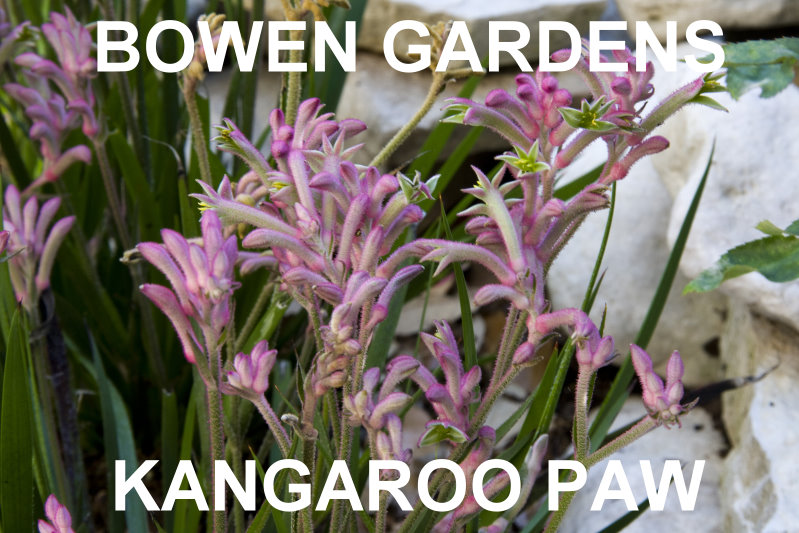
As you might guess, this plant originates in Australia. It is an evergreen rhizomatous perennial which forms clumps 1-2' wide with green strapped shaped leaves which are up to 18" tall; however, the stems from which the flowers emerge are 2-4' tall. Blooms of this variety are velvety pink; however, blooms of others range from red, green, gold, orange, chartreuse, maroon, and brown/bronze. Blooms spring and fall. The botanical name translates “unequal” or oblique flower, which describes the flower’s unequal parts or “paw” shape. Prefers well-drained soil. Water regularly (avoid overhead watering) when growing and flowering, but keep it almost totally dry from the end of the blooming season until it starts growing again in the fall. Lightly fertilize in spring; keep phosphorus low. Remove the old leaves down as low as possible after the flowering period, but try not to injure emerging fans. It is prone to fungus (particularly ink spot disease), but less than other varieties of Kangaroo Paw. Snails can also be a problem. Hardy to 25-30°
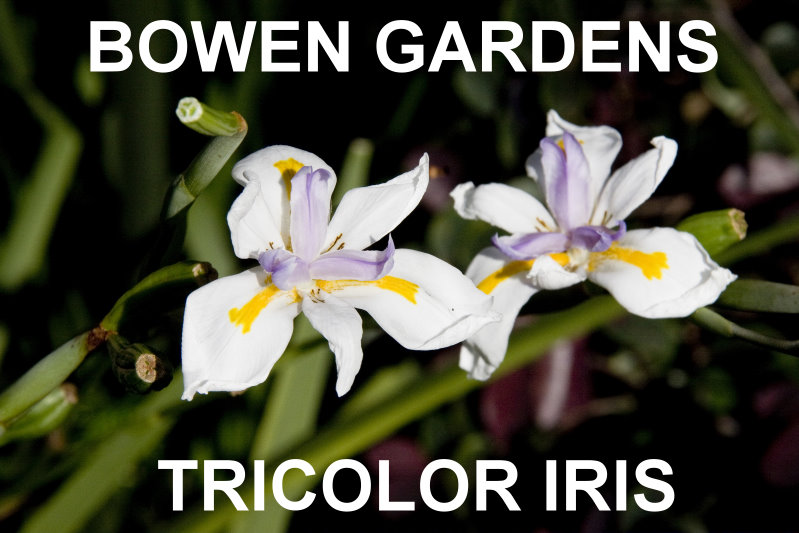
(Moraea grandiflora)
Tricolor Iris, sometimes referred to as Moraea (Dietes) iridioides - This perennial, evergreen African iris, is popularly known as Butterfly Iris. It grows and spreads through rhizomes, with a height of 12-24" and spread to 12". The long, rigid sword-shaped leaves form a fan shape. The flowers appear similar to butterflies, having white flowers with a yellow stripe through the middle and have violet central segments. Blooms from spring through summer, especially after it rains. Sun to partial shade, (flower best in sun); medium water requirements. Zone 9-10.
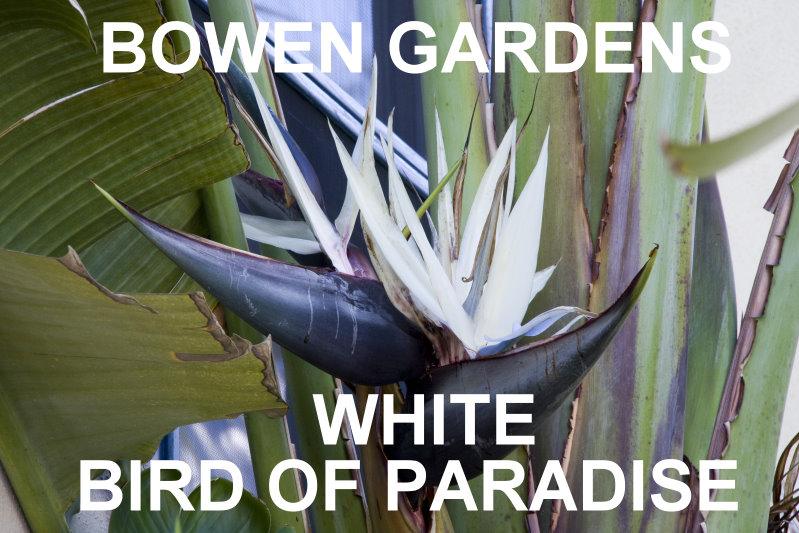
(Strelitzia nicolai)
AKA Giant Bird-of-Paradise, able to reach 20-30' in height and 6-10' spread (but often much smaller), with banana-like leaves and upright, clumping stalks. The lower trunk becomes exposed as older leaves drop off. Flowers are white with dark blue tongue, reaching a size of 10-12 inches. It takes a few years before blooming. Grows well in full sun to light shade in moist, well-drained acidic or slightly alkaline soil. Cannot take extremely wet soil, so keep on the dry side. Growers usually use multiple plants to get a fuller plant. Protect from high winds to minimize ragged leaves. Prune to remove dead leaves. Zone 9B-11.