
WILDLIFE HABITAT
January 14, 2011
by Ruth Anderson, Victoria County Master Gardener
edited by Charla Borchers Leon,
Victoria County Master Gardener
VICTORIA COUNTY
MASTER GARDENER ASSOCIATION
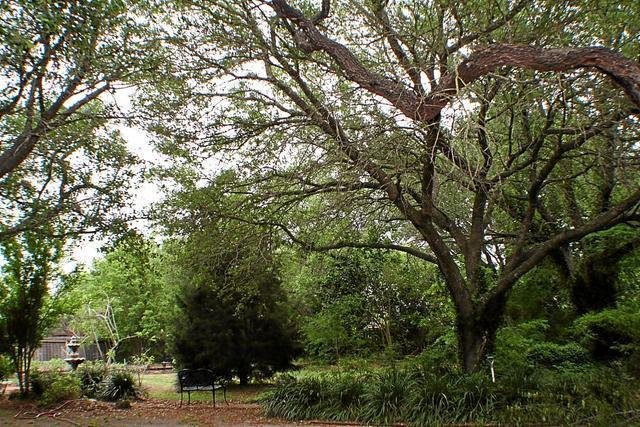
A variety of wildlife hides among the native plants encompassing the whole landscape.
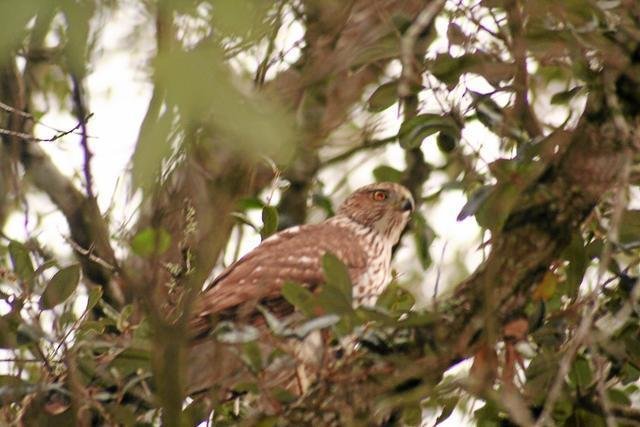
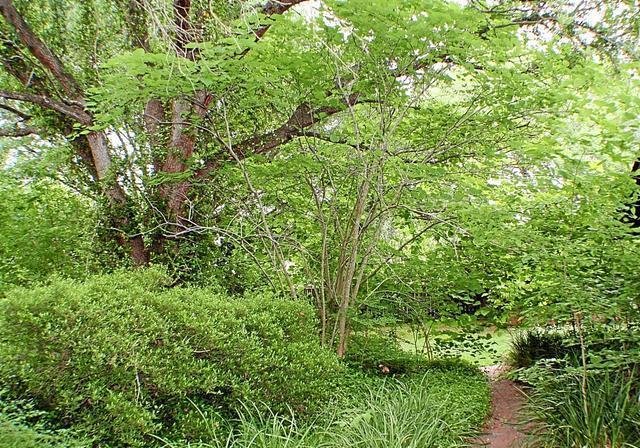
Birds and animals find shelter in tall trees, understory trees and shrubs, and bushes.
Wanting our yard filled with a variety of wildlife that loves to entertain us, as well as meet the needs for their survival, landscaping efforts were directed at keeping our guests permanent. In 1978, planting of a variety of oak trees, yaupons and deciduous holly was completed in our yard. We have been rewarded with flocks of blue jays, white wing doves, Spanish doves and a resident hawk. An owl house awaits the return of the Eastern screech owl.
Why wildlife comes
There are enough acorns and berries for entire flocks of feathered friends, as well as friendly squirrels. Crawling among the leaves and branches are lizards, while hummingbirds use the bottlebrush and supplement at the feeders. Butterflies dart among the flowering lantana and blooming wildflowers. Thirty years later, the yard remains a work in progress to meet the challenge of practicing the best conservation methods and providing the environment for our wildlife guests.
Recognized landscaping efforts
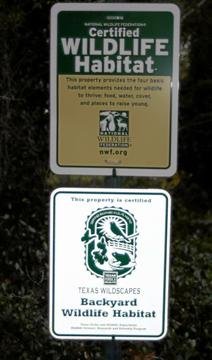
Surrounded by predominately native plants and a welcoming habitat for wildlife, the Anderson yard has received three certifications. The National Wildlife Federation certified the yard as a "Natural Wildlife Habitat." The Texas Parks and Wildlife Department certified the yard as a "Texas Wildscapes." The "Best of Texas Backyard Habitats" was awarded by both organizations.
Creating a wildlife friendly backyard
Kelly Conrad Bender, of the Texas Parks and Wildlife, states in Texas Wildscapes that as Texas lands become more urbanized, our wildlife is losing its habitats. Therefore, in 1994, the Texas Wildscapes Backyard Wildlife Habitat Program was initiated. Following the National Wildlife Federation's model, this program encourages Texans to establish natural habitats in urban areas. If nature is supported just steps from our backdoors, the food, water, shelter, space and native plants will create an environmentally friendly, habitat-rich Texas.
Environmentally friendly landscape
An environmentally friendly landscape is one that conserves water, allows native plants to thrive and provides food and shelter for native wildlife. Being mindful of what is planted and where it is planted in our yards will provide the habitat desired. This provides a permanent home for many, while allowing others a supportive space as they migrate through our area.
Certification criteria
To be certified as one of more than 33,000 habitats in the United States, the yard must be at least 50 percent native plants, such as trees, shrubs, vines and wildflowers. There has to be food for the wildlife year-round and a useable and reliable source of water available. Birdfeeders alone will not be considered. Food producing plants should be included in the landscape. Birds will require shelter provided by the tall trees, understory trees and shrubs and bushes. Small animals shelter in brush piles, rock piles, toad houses and nest boxes. Exotic and invasive plants are discouraged because they detract from the natural habitat and abuse our natural resources.
Getting started
Begin observing and tracking the wildlife in your backyard. Consider your existing trees and shrubs. What would you like to attract to your backyard? Think of creating a wildscape by adding to your existing yard. Regardless of the size or location of your yard, you may be on the way to meeting certification requirements. Making your backyard a haven for nature's wildlife brings enjoyment to the viewer and a habitat or stopover for creatures in our environment.
Creating a wildlife habitat allows all visitors to share in nature right in your own backyard.
Texas Parks and Wildlife Department (TPWD)
Food plants and complementary supplements
Reliable water sources maintained year round
Layers of shelter and artificial nest sites that wildlife will use
50 percent native plant composition
Follow at least six resource conservation measures (TPWD)
Establishing a rain garden or buffer to filter storm water
Using drip soaker hose instead of sprinkler
Irrigating sparingly and only in early morning or evenings
Planting deciduous trees along the southern exposure of the house
Eliminating chemical use
Capturing roof rainwater
Mulching
Reducing or eliminating lawn areas
Keeping your cat indoors
Composting yard and food wastes
TEXAS WILDSCAPES CERTIFICATION
Send request to:
Texas Wildscapes
4200 Smith School Road
Austin, Texas 78744
Or download an application at: www.tpwd.state.tx.us
Best of Texas Backyard Habitats
Send request to:
National Wildlife Federation
Gulf States Natural Resource Center
44 East Avenue, Suite 200
Austin, Texas 78701
Or download an application at: www.nwf.org
GOOD NATIVE PLANTS (TPWD)
Mountain Laurel
Buffalo Grass
Autumn Sage
Yaupon
Esperanza
Mexican feather grass
Redbud trees
Columbine
Some Common Exotic Plants to Avoid
Japanese Honeysuckle
Bamboo
Chinese Tallow
Pyracantha
Waxleaf Ligustrum
Salt Cedar
RECOMMENDED PLANTS FOR GULF COAST Prairies and Marshes (TPWD)
Water Oak
Red Oak
Southern Live Oak
Yaupon
Wax myrtle
Red buckeye
Eastern red cedar
Short-leaf pine
Loblolly pine